

Modern blockchains are built on cryptography, but not all of them treat permissions the same way. Most networks still rely on a simple model: one private key controls everything. This is easy to use but difficult to secure… especially for institutions, multi-user teams, and high-stakes environments.
XPR Network approaches permissions very differently.
Built on an EOSIO-based architecture, the network includes a native, multi-layered permissions system at the protocol level. This gives users, developers, and enterprises the ability to define granular authority, create custom roles, and implement secure multisig without relying on external tools or custom contract logic.
Why Permissions Matter
The moment multiple people or services need to interact with the same account or when an organization requires operational separation of duties, a single key model breaks down. Traditional EVM chains patch this gap with smart-contract-based access control (Ownable, AccessControl, timelocks, Gnosis Safe multisigs), but all of these are external constructs built on top of the chain, not core to it.
XPR Network builds permissions into the operating system of the chain itself.
This design offers three core advantages:
Native, secure multisig at the account level
Named, hierarchical permission levels tailored to each use case
Granular control over individual contract actions
Core Concepts
1. Named Permission Levels
Every account on XPR Network has at least two permission levels:
owner – ultimate authority; used rarely
active – general operational authority
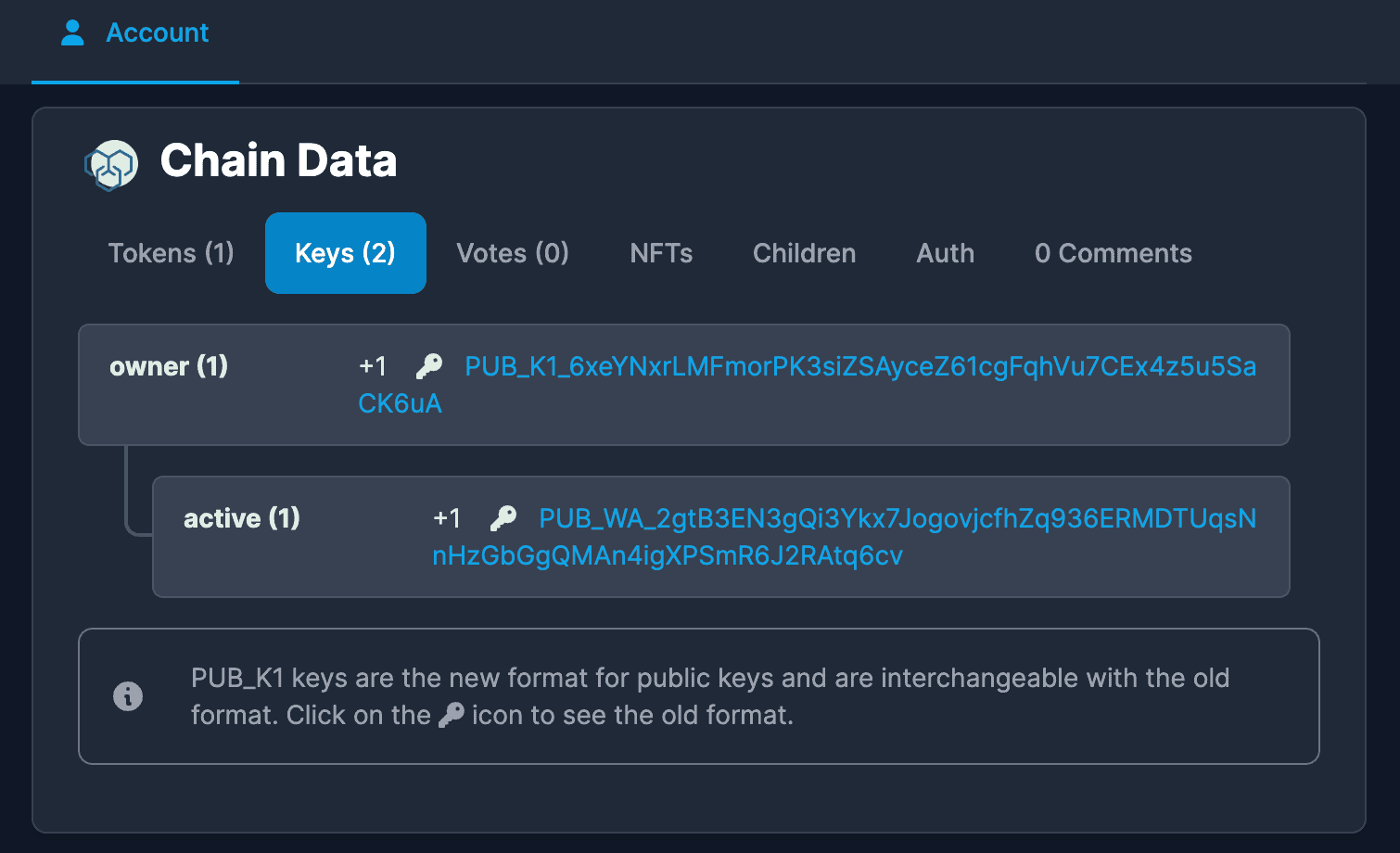
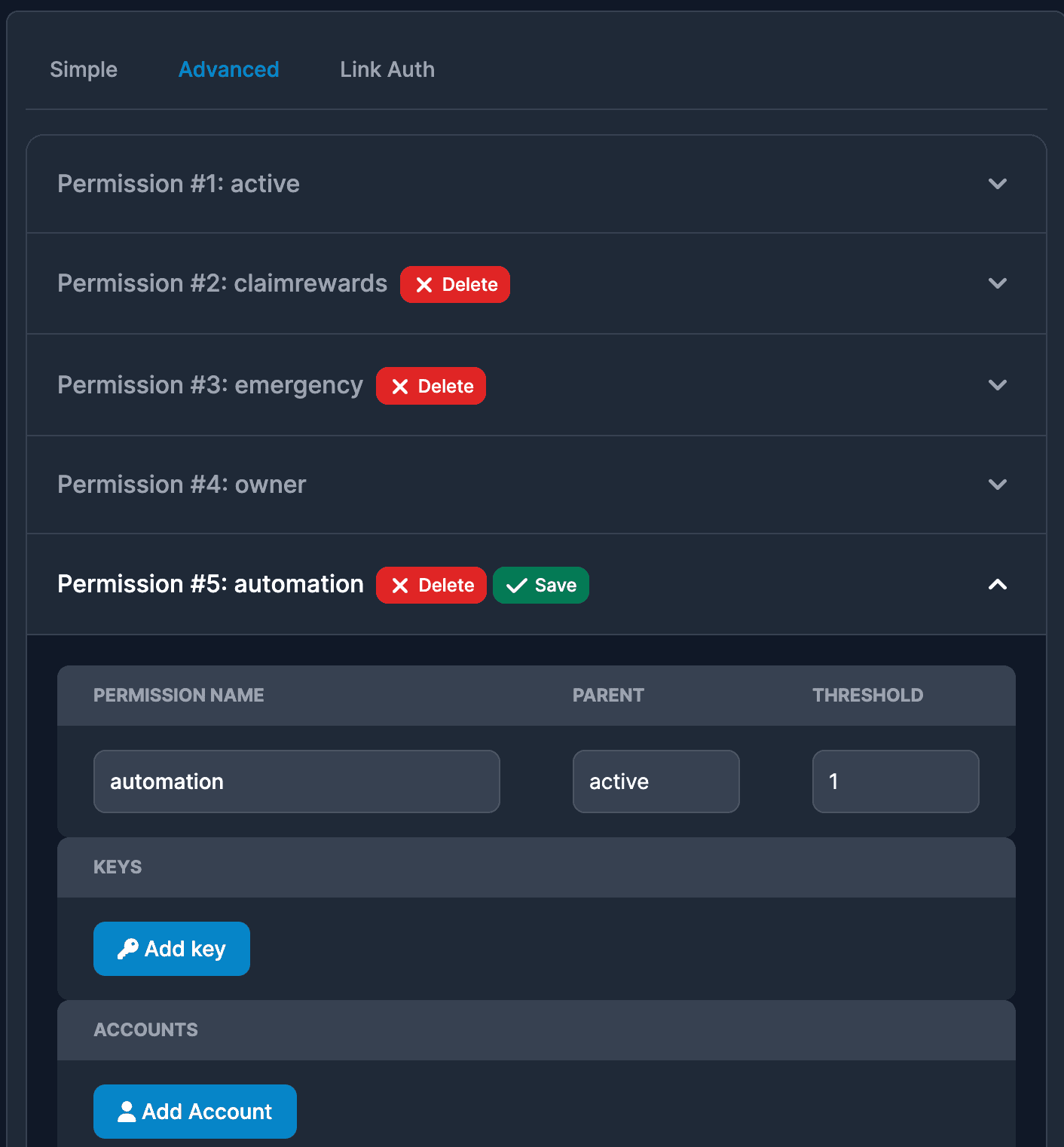
But accounts can create any number of custom permissions such as:
withdrawal_opscustodyautomationcompliance_revieworacle_signer
Each permission level can be linked to keys, accounts, or multisig structures.
2. Weighted Threshold Multisig
Permissions are defined using a threshold model:
Each key or account has a weight
Each permission level has a threshold
A valid authorization is any combination of keys/accounts whose total weight meets or exceeds the threshold
Example:
This means: two team members must approve a withdrawal.
3. Action-Level Permission Mapping
Smart contracts on XPR Network can assign a specific permission level to each action.
Example:
token.transfer→ requiresactivetoken.freeze→ requirescompliance_opsbank.withdraw→ requireswithdrawal_ops
This mapping ensures that internal operations follow strict security boundaries without modifying contract logic.
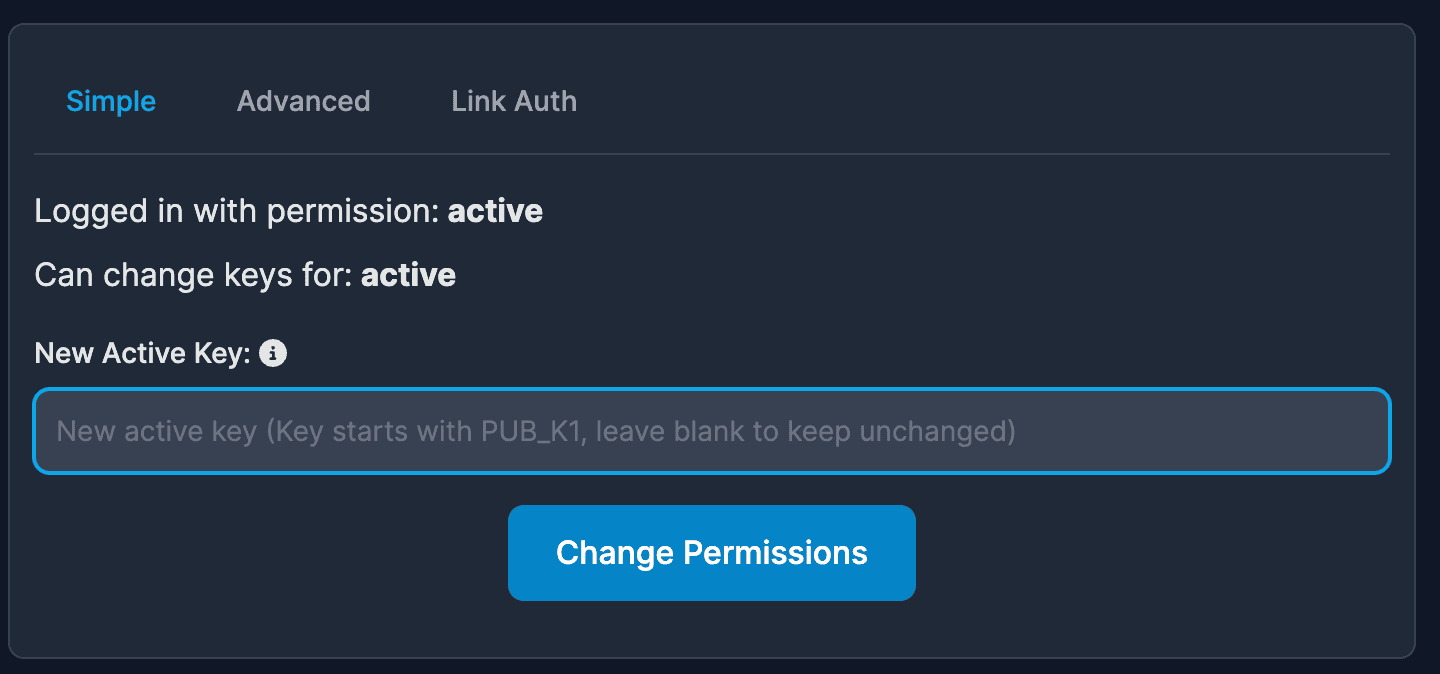
4. Key Rotation Without Contract Upgrades
Because permissions are part of the account itself, not encoded in the contract, rotating keys or updating thresholds never requires redeploying or upgrading a contract. This creates a safer, more maintainable system for:
security audits
incident response
enterprise operational changes
removing team members or updating roles
Why This Approach Is More Secure
Most blockchains treat account authority as a monolith. If someone gains access to a key, they effectively become the owner of the account.
On XPR Network:
A compromised key may only grant access to one permission level, not the entire account
The attacker still needs to meet the threshold
Critical actions can be isolated to dedicated permission levels
Sensitive permissions can be restricted to offline or hardware-secured keys
This structure significantly reduces the attack surface.
Comparing XPR Network to EVM-Chains
Feature | XPR Network (EOSIO-style) | EVM Chains |
Native multisig | Yes (protocol-level) | No (requires Gnosis Safe) |
Named permissions | Yes | No |
Action-level permissions | Yes | No (must implement in contract) |
Key rotation | Instant, no redeploy | Requires contract changes |
Delegation to accounts or contracts | Yes | Limited |
Enterprise-grade role systems | Built-in | DIY in Solidity |
The difference is structural: XPR Network has an operating-system-level permissions model. EVM relies on patterns and tooling layered on top.
Real-World Use Cases
1. Institutional Custody
Banks and fintechs can:
Create dedicated roles for withdrawals, freezing, minting, reconciliation
Require 2–3 signatures for sensitive operations
Delegate automation to separate permission levels safely
2. DeFi Protocol Safety
Protocols can isolate admin functions such as:
parameter updates
pausing contracts
contract upgrades
Each can be protected by unique permission trees without custom Solidity-style access control.
3. Multi-user Teams
Companies can assign:
marketing keys (1-of-1)
operations keys (2-of-3)
developer keys (1-of-1 for deployment)
and rotate them as staff changes.
4. Autonomous Services
Bots or cron-like automations can be given restricted permissions:
allowed to execute
claimrewardsprohibited from executing
withdraw
This minimizes risk from automation.
Why XPR Network’s Permission System Is a Competitive Advantage
XPR Network’s permission model is not an add-on, it is a foundational architectural choice. It delivers:
enterprise-grade security
developer flexibility
safer automation
fine-grained control
reduced reliance on external tools
real-world readiness
As the ecosystem grows – especially with increasing interest from regulated institutions , this system offers a more robust, maintainable, and intuitive way to secure on-chain activity.
Conclusion
XPR Network’s permission system stands out because it does something most blockchains never considered: it treats account authority as a first-class citizen of the protocol.
Where other networks rely on contracts, libraries, and external multisig wallets, XPR Network provides:
customizable permission hierarchies
native threshold multisig
granular action-level authorization
safe key rotation
This empowers everyone, from casual users to global enterprises – to build secure, adaptable, and highly controlled blockchain systems without unnecessary complexity.
Learn more about multisig in our knowledge base or in the explorer documentation.
The XPR Newsletter
Second To Layer None
Subscribe to our newsletter for the latest development updates, bounties, product launches + more.